
FLY FISHING IN WALES
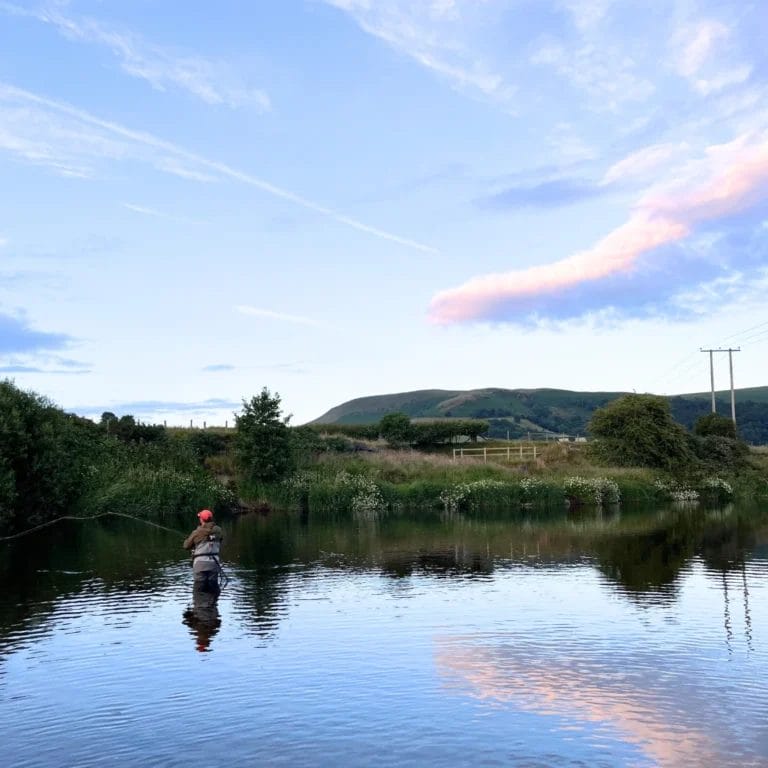
Wade wild rivers teeming with brown trout, grayling and sea trout. Experience fly fishing in Wales — where ancient rivers wind through the Brecon Beacons, and every bend holds the promise of a wild fish rising.
About the Destination
FLY FISHING IN THE WELSH HILLS
Wales is one of the finest fly fishing destinations in the British Isles — a land of tumbling freestone rivers, dramatic mountain scenery and truly wild fish. The rivers Wye and Usk, in particular, are renowned for prolific populations of wild brown trout, while the Teifi, Towy and Dovey draw anglers from across the world for their legendary sea trout — known locally as sewin.
What makes fly fishing in Wales truly exceptional is the combination of pristine water quality, remarkably low angling pressure, and fish that are entirely wild and self-sustaining. There is no stocking here — just hard-fighting trout and grayling in peak condition, thriving in rivers that have been shaped by millennia of Welsh rain and mountain geology.
From powerful spate rivers to intimate upland streams, from technical dry fly fishing to upstream nymphing and atmospheric night fishing for silver sewin, fly fishing holidays in Wales offer something to reward anglers of every skill level — all set against some of Britain’s most beautiful and unspoilt landscapes.
FEATURED TRIPS
Guided fly fishing trips across Wales’s finest wild waters — from the legendary rivers Wye and Usk in the Brecon Beacons to the sea trout rivers of West Wales
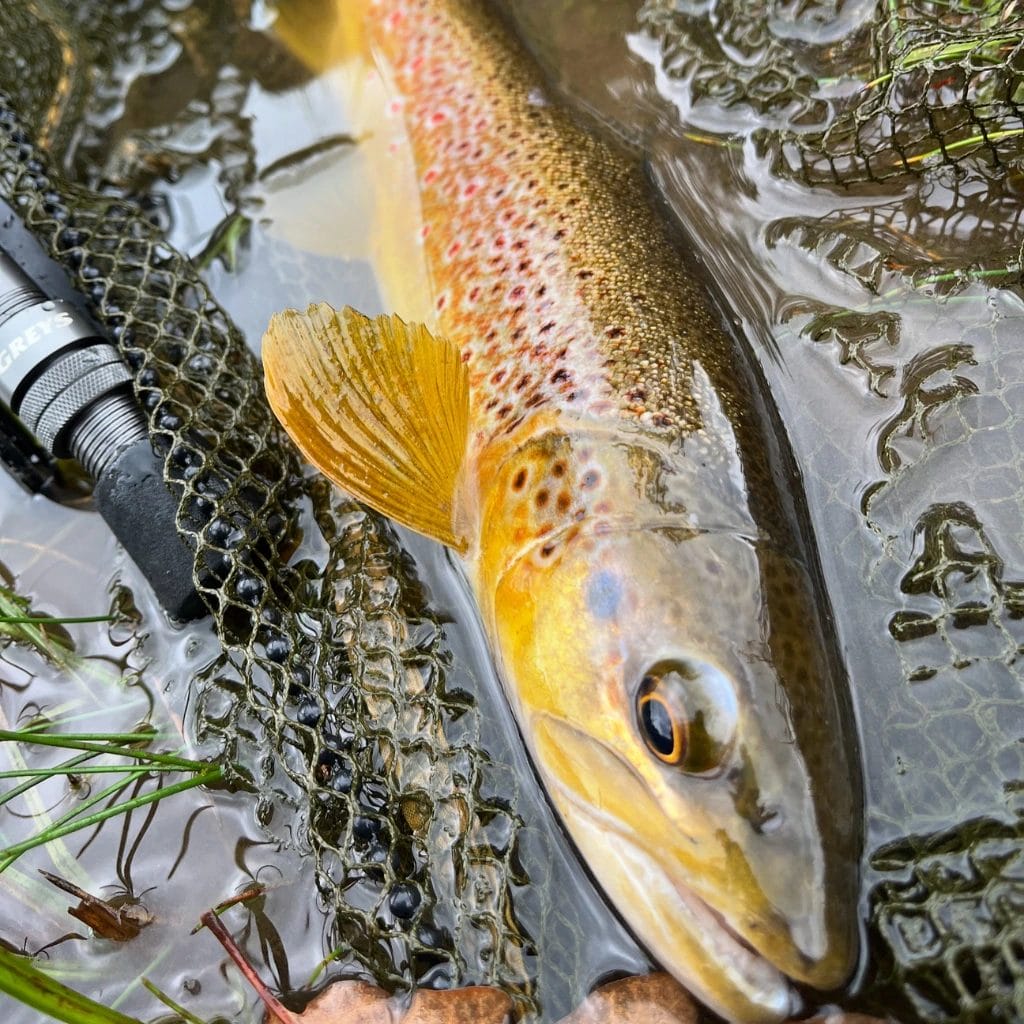
WYE VALLEY WILD TROUT
The ultimate guided fly fishing experience in Wales. The River Wye and its tributaries — the Irfon, Ithon, Edw and Elan — offer exceptional wild brown trout fishing through some of mid-Wales’s most stunning scenery.
These pristine freestone rivers hold healthy populations of wild browns, with fish averaging 8–12 inches and larger fish in the 2–3lb bracket landed every season. Your guide reads the water, selects the right method for the conditions, and coaches you through every pool, whether that’s upstream nymphing through fast pocket water or delicate dry fly presentations on glassy glides.
Duration: Minimum 1 Day
Price: from £200
Species: Wild Brown Trout
Best: March – September
WINTER GRAYLING
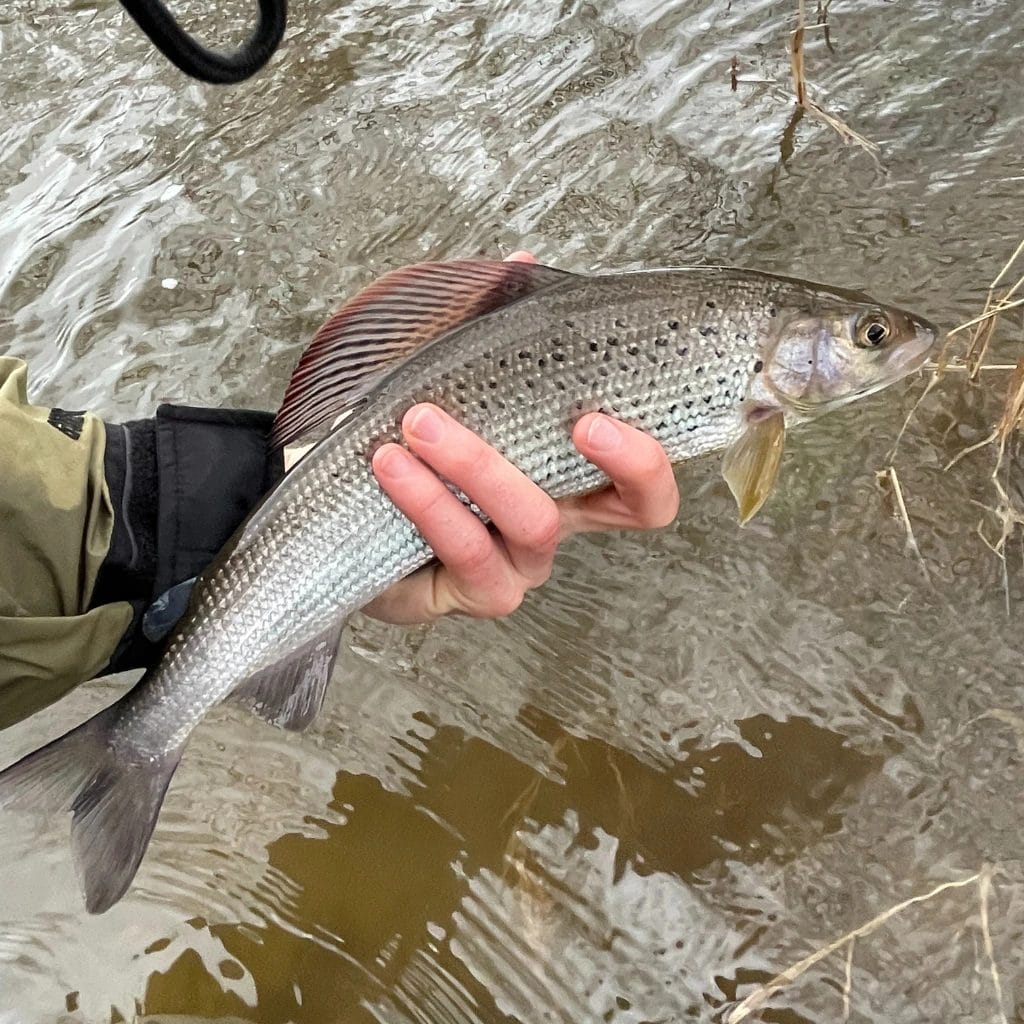
When the trout season closes, the grayling fishing in Wales truly comes alive. The River Wye holds a large head of grayling — the “Lady of the Stream” — offering superb sport through the autumn and winter months. These beautiful, sail-finned fish fight hard in cold water and rise freely to tiny dry flies and nymphs even on the coldest days. Czech nymphing, French leader techniques and traditional upstream dry fly all produce fish, and specimens over 30cm are possible. It’s the perfect way to extend your season and experience Welsh rivers in their most atmospheric mood — frost on the banks, mist on the water, and grayling rising in the tail of every pool.
Duration: Minimum 1 Day
Price: from £200
Species: Grayling
Best: October – February
Why Fly Fish Wales
WHAT MAKES FLY FISHING IN WALES DIFFERENT
WILD TROUT
Welsh rivers hold truly wild, self-sustaining populations of brown trout — no stocking, no pellet-fed fish. The River Usk boasts a count of trout per mile to rival the best rivers in the world. Every fish you catch has been born in these waters and grown strong on natural food.
YEAR-ROUND FISHING
Wales offers genuine year-round fly fishing. Brown trout from March to September, sea trout on summer nights, and superb grayling through autumn and winter. When the season closes on one species, another opens — there is always a reason to be on the water.
STUNNING SCENERY
Fish against a backdrop of the Brecon Beacons, the rolling hills of the Wye Valley, or the dramatic uplands of mid-Wales. Welsh rivers flow through some of Britain’s most beautiful and unspoilt landscapes, where red kites soar overhead, dippers bob on boulders, and kingfishers flash along the banks.
Practical Info
SEASON & LICENSING
Season: The trout fishing Wales season runs from 3 March to 30 September on most rivers. Early season brings Large Dark Olive and March Brown hatches — ideal for nymph and wet fly fishing. May and June deliver the mayfly and the finest dry fly sport of the year. High summer offers warm evenings and prolific sedge hatches. Grayling can be fished year-round on most Welsh waters, with the best sport from October to February. The sea trout (sewin) season typically runs April to October, with the peak run arriving in late June through August.
Licensing: All anglers aged 13 and over need a rod licence from Natural Resources Wales (NRW), available online. In addition, most river stretches require a day ticket or club permit — we arrange all necessary permissions as part of your guided trip.
Regulations: Catch and release is strongly encouraged on most Welsh rivers, particularly for wild brown trout and sea trout. Barbless or de-barbed hooks are required on many waters. Always check local byelaws for the specific river you are fishing.
What’s Included
YOUR TRIP PACKAGE
- Expert local guide with over 12 years' experience on Welsh rivers
- All rod licences and day ticket permissions included
- Tuition and coaching tailored to your ability level
- Access to private and lesser-known stretches of river
- All flies and terminal tackle provided
- Full equipment available if needed — rods, reels, waders and nets
What Our Anglers Say
Trusted by anglers of all abilities to deliver unforgettable fly fishing in Wales experiences.
“James put me onto wild browns on the Wye that I never would have found on my own. His knowledge of the river is incredible — he reads the water like a book. I landed the best brown trout of my life, a gorgeous fish of well over two pounds from a run I’d have walked straight past. Already planning my next trip.”
David H.
London
“As a complete beginner, I was nervous about booking a guided day — but James made it so easy. By lunchtime I was casting confidently and I caught my first ever wild brown trout on a dry fly. The scenery in the Wye Valley was breathtaking and the whole experience was brilliant. Can’t recommend FLYRUN highly enough.”
Rachel M.
Bristol
READY TO FLY FISH WALES?
Tell us what you’re after — wild brown trout on the Wye, winter grayling, sea trout nights, or a combination — and we’ll build a fly fishing holiday in Wales around your goals. No cookie-cutter packages. Just honest advice from a guide who’s fished these rivers for over a decade.
ENQUIRE NOW
READ MORE ABOUT FLY FISHING IN WALES
Fly fishing in Wales centres on a handful of truly exceptional rivers. The Wye and its tributaries form the backbone of the mid-Wales fishery — a network of freestone rivers that tumble through wooded valleys and open moorland, holding wild brown trout and grayling in outstanding numbers.
The River Wye itself is one of the longest rivers in Wales and one of the finest mixed fisheries in the UK. In its upper and middle reaches it offers superb wild brown trout fishing through varied water — fast pocket water, deep pools, long glides and tumbling runs. The Wye also holds an excellent head of grayling, making it a genuine year-round fishery. Tributary streams like the Irfon, Ithon, Edw and Elan add miles of smaller, more intimate water where wild browns thrive in stunning isolation.
The River Usk is a Site of Special Scientific Interest and widely regarded as one of the finest wild brown trout rivers in Europe. Its trout population per mile rivals the best chalk streams, but these are freestone fish — strong, beautifully marked and entirely wild. The Usk also receives good runs of salmon and sea trout.
For sea trout, the rivers of West Wales are legendary. The Towy, Teifi and Dovey are the principal sewin rivers, drawing anglers from across the UK and beyond for their summer night fishing. These powerful, silver fish can exceed 10 pounds, and a fresh-run sewin on a Welsh river at dusk is one of the great experiences in British fly fishing.
Wales offers remarkable variety within a compact area. The main fly fishing regions each have their own distinct character and appeal.
The Wye Valley & Mid-Wales: The heart of Welsh river Wye fishing. The upper Wye and its tributaries — the Irfon, Ithon, Edw and Elan — wind through the hills of Powys and the Cambrian Mountains. This is classic freestone trout and grayling country: varied water, low pressure, and spectacular scenery. The market towns of Builth Wells, Rhayader and Llandrindod Wells make excellent bases.
The Brecon Beacons (Bannau Brycheiniog): The Usk flows through the heart of the Brecon Beacons National Park, offering world-class wild brown trout fishing in a dramatic mountain setting. The nearby Talybont Reservoir is a 300-acre stillwater holding exceptional wild browns. Brecon town provides excellent accommodation and dining within easy reach of the fishing.
West Wales: The Teifi, Towy and Dovey are the principal sea trout fishing Wales rivers. These powerful spate rivers run through beautiful, often remote countryside and are at their best from late June through August when the main sewin runs arrive. By day they also offer good wild brown trout fishing.
North Wales & Snowdonia: The rivers and lakes of Snowdonia (Eryri) offer a different character — smaller, wilder waters in truly dramatic mountain scenery. The Conwy, Glaslyn and Mawddach all hold wild trout and sea trout. Mountain lakes (llyns) offer solitary fishing for wild browns in breathtaking settings.
Wales is remarkably accessible from all parts of England and from international airports. The main fly fishing regions of mid-Wales are typically 3 to 4 hours’ drive from London, Birmingham or Bristol, with excellent road links via the M4 and M50 motorways.
The nearest airports are Cardiff (for south and mid-Wales), Birmingham (for mid-Wales and the Wye Valley), and Manchester or Liverpool (for north Wales). Bristol Airport also provides good access to the Wye Valley and Brecon Beacons.
Once in Wales, the compact geography is a real advantage. The Wye Valley, Brecon Beacons and upper Usk are all within easy reach of each other, making it simple to fish different waters on consecutive days. A car is essential for reaching the best fishing, but the drives themselves are a pleasure — winding through some of the most beautiful countryside in Britain.
For visitors planning a fly fishing holiday in Wales with accommodation, the market towns along the Wye and Usk offer excellent pubs, B&Bs, country hotels and self-catering cottages. Builth Wells, Brecon, Crickhowell and Hay-on-Wye are all popular angling bases with character and charm.
A 9-foot rod in 4 or 5 weight is the standard setup for fly fishing Wales rivers. The 4 weight is ideal for smaller tributaries and delicate dry fly work; the 5 weight is more versatile and handles wind and bigger water better. For sea trout, a 10-foot 7 weight is recommended for night fishing. Floating lines cover most situations, though a sink-tip can be useful for sea trout.
Leaders should be matched to conditions. For dry fly and nymph fishing, 9 to 12-foot leaders tapering to 4X or 5X are standard. For grayling on fine winter days, going down to 6X or 7X can make a real difference. For sea trout at night, a shorter, stronger leader of 8 to 12 pounds is typical.
Fly selection for Welsh rivers is straightforward. Nymphs: Pheasant Tail, Hare’s Ear, and various beadhead patterns in sizes 12-16. Dry flies: Parachute Adams, Klinkhamer, CDC patterns, and various olive and sedge imitations. For grayling, small Jig nymphs and pink-tagged dries work well. For sea trout, traditional patterns like the Medicine Fly, Teal Blue & Silver, and large dark tube flies are effective.
Breathable chest waders are recommended for most river fishing — Welsh rivers can be cold even in summer. Rubber-soled or studded wading boots are essential for the slippery riverbed. A good waterproof jacket is a must — Welsh weather is changeable, but that rain is what keeps the rivers flowing and the fish feeding.
Welsh rivers are precious natural environments, and responsible angling is central to the fly fishing in Wales experience. Many of the rivers we fish are Sites of Special Scientific Interest, and the wild fish populations that make them so exceptional depend on careful stewardship by anglers, landowners and conservation bodies.
Catch and release is strongly encouraged — and often mandatory — on most Welsh waters. Handling fish gently, using barbless hooks, keeping fish in the water where possible, and using a rubber-mesh landing net all help ensure that the trout, grayling and sea trout we catch today will be there for future generations.
Biosecurity is also important. Invasive species and diseases can be spread between river systems on boots, nets and waders. We ask all visiting anglers to follow the “Check, Clean, Dry” protocol — inspect your gear for debris, clean it thoroughly, and allow it to dry completely before moving to a different water.
Our guiding philosophy puts the health of the river first. We support the work of the Wye & Usk Foundation, Natural Resources Wales and local angling clubs who manage and protect these waters. When you fish with us, you’re contributing directly to the conservation of some of Britain’s most important river habitats.
FREQUENTLY ASKED QUESTIONS
All levels are genuinely welcome. Complete beginners will receive full tuition — from casting basics through to reading the water and presenting a fly. Intermediate anglers will refine their technique and learn to fish new methods. Experienced fly fishers benefit from deep local knowledge of the rivers, access to private water, and guidance on which methods work best in current conditions. Every day is tailored to your ability and goals.
The trout season runs from March to September, with April through June widely considered the finest months — spring hatches bring excellent dry fly sport. Summer offers warm evenings, prolific sedge hatches, and the chance to combine trout with sea trout at dusk. Grayling fishing peaks from October to February, when Welsh rivers are at their most atmospheric. Sea trout nights are best from late June through August. In short, there is outstanding fly fishing in Wales in every month of the year.
Full equipment is available through your guide — rods, reels, flies, waders and nets — so you don’t need to bring anything. If you prefer your own gear, a 9-foot 4 or 5 weight rod with floating line covers most Welsh river situations. Breathable waders and rubber-soled boots are recommended. We provide all flies and terminal tackle as standard on every guided day.
You’ll need a rod licence from Natural Resources Wales (NRW), which you can buy online at the NRW website. A full-season trout and coarse licence costs around £33; day licences are also available. Most river stretches also require a day ticket or club permit. We arrange all day tickets and permissions as part of your guided trip — the rod licence is the only thing you need to sort yourself, and we’ll remind you before your trip.
Guided day rates start from £200 per day for one angler. This includes full guiding, all flies and tackle, river access and day ticket fees. Multi-day bookings and group rates are available. For those planning a fly fishing holiday in Wales, we can recommend excellent local accommodation to suit all budgets — from cosy pubs and B&Bs to self-catering cottages in the Wye Valley. Get in touch and we’ll build a trip around your requirements.
Welsh weather is famously changeable — but that’s often good news for fishing. A bit of rain colours the river and gets fish moving, and overcast days can produce the best dry fly sport. Your guide knows these rivers in all conditions and will adapt the plan — we can move to different stretches, switch rivers, or change methods to suit the day. We carry on in all but the most extreme conditions, and some of the best days happen when the weather looks least promising. Come prepared with waterproofs and layers, and trust the process.